
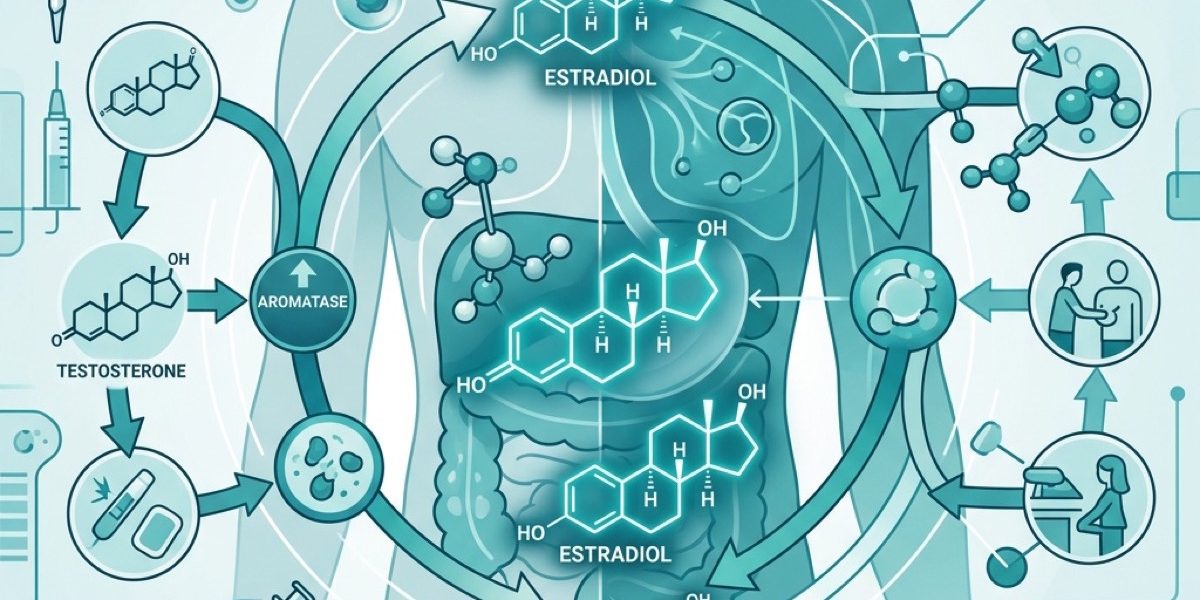
Estradiol is not just a female hormone. Men make estradiol too, mostly by converting testosterone through the aromatase enzyme. When testosterone therapy raises testosterone, estradiol can rise as well. That is not automatically bad.
Men need some estradiol for bone health, libido, vascular function, and overall endocrine balance[2]. The goal on TRT is not to drive estradiol as low as possible. The goal is to interpret symptoms and labs together.
When estradiol becomes clinically relevant
Estradiol may matter when a man on TRT develops breast tenderness, nipple sensitivity, fluid retention, mood changes, libido changes, or an unexpected mismatch between symptoms and testosterone levels. It may also matter when body fat is higher, because adipose tissue contains aromatase activity.
Why over-suppression is risky
Aromatase inhibitors can lower estradiol, but routine overuse is a problem. In men, low estradiol can harm bone density and may worsen sexual or mood symptoms. Studies of aromatase inhibition in men have shown that estradiol suppression can reduce bone mineral density, which is a reason to be cautious[1].
What a safer approach looks like
- Confirm symptoms instead of treating a number alone.
- Check whether testosterone dosing, timing, route, or body composition is driving the issue.
- Review SHBG, free testosterone, hematocrit, and metabolic health when relevant.
- Use medication changes only when the clinical picture supports them.
Bottom line
Estradiol on TRT is a balance issue, not an enemy. High symptoms with high estradiol may deserve attention, but reflexively crushing estrogen can create its own risks. The professional path is testing, context, and careful follow-up.
Labs need timing and context
Estradiol results can vary by assay, timing, body composition, and testosterone formulation. A single lab value without symptoms may not explain the whole picture. The clinician should know when the blood draw happened, what testosterone level looked like at the same time, and whether symptoms match the lab pattern.
Some men feel worse when estradiol is too low. Others feel worse when testosterone and estradiol both run high. Some symptoms attributed to estradiol are actually caused by dose timing, fluid retention, sleep disruption, anxiety, or a non-hormonal issue. This is why reflex treatment based on one number is risky.
Body composition is part of the conversation
Higher body fat can increase aromatase activity, which may raise estradiol in some men. Improving insulin resistance, waist circumference, alcohol intake, and sleep can sometimes make hormone management easier. That does not replace medical care, but it can reduce the pressure to chase every symptom with another medication.
Questions to ask
- Is my estradiol result clinically relevant or just outside a lab range?
- Do my symptoms fit high estradiol, low estradiol, or something else?
- Can my testosterone timing or formulation be adjusted before adding another medication?
- How will bone health and long-term monitoring be protected?
References
- [1] Burnett-Bowie SM et al. Effects of aromatase inhibition on bone mineral density and bone turnover in older men with low testosterone levels. J Clin Endocrinol Metab. 2009. PMID 19820017.
- [2] de Ronde W, de Jong FH. Aromatase inhibitors in men: effects and therapeutic options. Reprod Biol Endocrinol. 2011. PMID 21693046.
- [3] Mulhall JP et al. Evaluation and Management of Testosterone Deficiency: AUA Guideline. J Urol. 2018. PMID 29601923; validity confirmed by AUA in 2024.
