
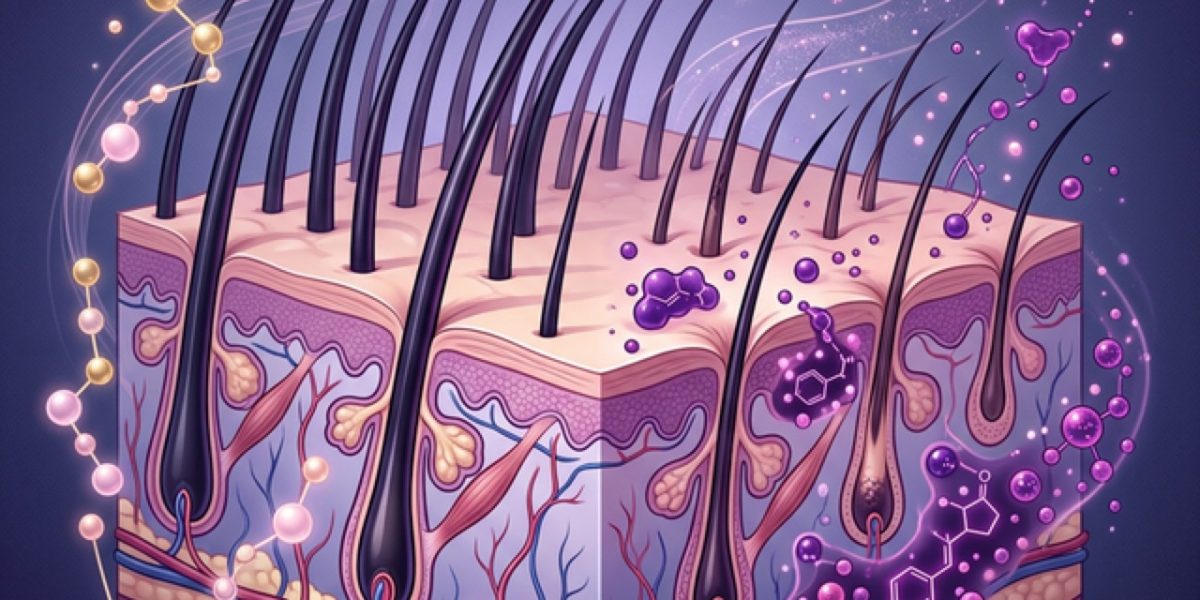
All What You Need To Know About Hair Loss
Hair loss or thinning is one of the things that affect many men and women. This condition can be extremely embarrassing and hard to control, which lowers the quality of life, especially for women. Several factors that lead to hair loss but some of the common causes are PCOS (Polycystic Ovarian Syndrome) and Estrogen dominance. Therefore, hair thinning is one of the most adverse side effects of PCOS. Estrogen levels are also connected to hair loss as the female hormone can significantly affect the growth of your hair.
Studies have revealed that estrogen slows the rate at which your hair grows at as it extends the growth phase. Therefore, more hair is in the growth phase at a particular time, which explains why women’s hair is plentiful than men’s. Besides, estrogen aids in preventing hair loss in women, unlike testosterone that causes it. Apart from preventing hair loss, studies also show that estrogen actually stimulates the growth of new hair. This explains why women have thicker, more plentiful and healthier hair during pregnancy, as it is the period when there are higher concentrations of estrogen. Moreover, the extra hair falls out after some months of giving birth, which shows the relationship between hair loss and estrogen.
Low Estrogen And Hair Loss
High levels of estrogen, especially during pregnancy promote hair growth, but low estrogen levels in the female body may lead to hair thinning or loss. This explains why most women experience hair loss during menopausei. During menopause, effects that results from the male hormone testosterone causes the hair follicles fall out thus reduces the growth phase of women’s hair. Usually, the subsequent hair loss is gradual but it is noticeable.
Hair loss can also result from taking estrogen supplements, but this actually stops once you stop taking them. For instance, some of the women experience rapid rates of hair loss once they stop taking birth control pills. However, this condition is mainly temporary as it usually clears off when your body attains its normal hormonal balanceii.
The relationship between hair loss and estrogen are also evident in women who undergo cancer treatment, which destroys the ovarian function. Besides, it also happens to those women in menopause who have their ovaries removed. This is because in both cases the level of estrogen in the body drops significantly, as the ovaries are the primary estrogen producers. Moreover, such women are at a greater risk of experiencing conditions that are similar to menopause symptoms such as skin thinning, hair loss and hot flashes if supplemental hormonesiii are not offered.
Finally, the sudden decline in the levels of estrogen after giving birth can also lead to hair loss as mentioned earlier. However, the hair that falls off is usually the extra hair that is gained during pregnancy and therefore the hair does not get thinner than the way it was before the pregnancy.
What Are the Remedies for the Hair Loss Associated with Low Estrogen?
Hair loss is one of the hardest side effects of low estrogen and therefore most women seek to find the right solutions to it. Fortunately, some remedies can help in relieving this condition to ensure that does not affect the quality of your life.
The doctor may offer estrogen supplements if he or she suspects that your hair loss is as a result of decreased levels of estrogen, he or she may offer supplementary estrogen. This is a Hormone Replacement Therapyiv, which can either be applied on the skin as patch or gel or be taken orally. Besides, some doctors may also give such women birth control pills to improve the estrogen levels in their body. However, the use of estrogen supplementation still generates some controversies despite many doctors prescribing it. Some of the critics are concerned by the lack of medical studies that support its effectiveness while others do not approve that low levels of estrogen can lead to hair loss.
However, studies have shown that some women experience huge improvements in hair loss when they start taking estrogen supplements, while others little improvements. This is because different people respond differently to supplements depending on several factorsv. Therefore, it is not good to compare yourself to other people when deciding on the right remedies to take. Instead, it is advisable to discuss the matter with your endocrinologist or at least your doctor. It is also important to determine first whether the hair loss is due to low estrogen levels, which explains why you should involve your doctor before taking any supplementsvi.
Natural Remedies For Low Estrogen Levels
With many people questioning the safety of estrogen supplements, it is important to look at the natural ways of boosting estrogen levels. One of the natural ways to boost estrogen is including foods that are rich phytoestrogensvii sources in your diet. These include legumes, fruits, nuts, berries, grains, and mainly soybeans or soy products.
However, it is important to understand that there are some fears over the effects of taking a diet that is high amounts of soy. This is because some studies show that taking a diet high in phytoestrogens may lead to some adverse effects, but synthetic estrogens are considered to be better.
Estrogen Dominance (Too Much Estrogen) And Hair Loss
Usually, the levels of estrogen and progesterone do not decline equally as the levels of progesterone decline faster, which leaves menopausal women with estrogen dominanceviii. On the other hand, the level of Estrogen do not decline faster as much as the levels of progesterone do, as it is readily available from the surroundings and in other body tissues. Therefore, even if the ovaries are the main estrogen source before menopause, studies have shown that fatty tissues continue to produce estrogen after menopauseix.
Moreover, xenoestrogens are obtained from all sorts of products, which are available environmentally while phytoestrogensx are found only in certain plants. Xenoestrogens are found in plastics, pesticides, dairy products, nail polish, as well as chicken and red meat, which are hormonally supplemented. With high amounts of estrogen in the surrounding, it is highly unlikely that low estrogen is the cause of hair loss. Instead, estrogen dominance is more likely cause this condition. This can be determined by taking a full Hormone Panel test, which checks all levels of all your hormones. Therefore, it is the best way to determine whether your hair loss is due to estrogen dominance or other causesxi.
How To Avoid Estrogen Dominance
Many studies have shown that estrogen is more likely to be the cause of hair lossxii. Therefore, it is important to know different ways that can help you avoid experiencing estrogen dominance. These ways include:
- • Getting Properly Tested
It is advisable to get a properly tested to establish the cause of the hair lossxiii. This is because taking estrogen supplements unnecessarily by assuming that the condition is due to low estrogen may lead to increased hormonal imbalancexiv.
• Regular Exercise
Exercising regularly helps in maintaining a healthy weight and therefore prevents excessive production of estrogen as it is in produced in the fat cellsxv.
• Avoid Environmental Estrogen
This is by avoiding consuming diets with high amounts of soy products and avoiding hormonally treated animalsxvi when eating meat or dairy products.
• Healthy Diet
It is also important to ensure that you include a healthy diet such as probiotics to keep your digestive system healthyxvii. This is because healthy digestive system prevents the re-absorption of excess estrogen.
• Limit Caffeine Intake
Studies have revealed that excessive intake of caffeinexxx can lead to increased estrogen levels in women, which results in estrogen dominance. This has been identified as one of the causes of estrogen dominance in Asian women.
• Avoid Refined Carbohydrates
It is also advisable to avoid over-consumption of refined carbohydratesxviii such as white rice, white pasta, and white bread.
Effects Of Estrogen Dominance
Studies have shown that estrogen dominance is one of the leading of the causes of thyroid problems, which include hair loss. This is because high levels of estrogen cause the liver to create excess thyroid binding globulin (TBG)xix. TBG prevents the absorption of thyroid hormones by binding them in the blood. This means that these hormones are not absorbed where they are required in the body cells to support body’s metabolismxxi.
Unfortunately, the problem is not revealed by standard thyroid conditions tests. This is because the thyroid hormone levels in the blood remains unaffected, though the hormone is bound by the thyroid binding globulin. However, a blood testxxii can be used to detect the presence of TBG and therefore, it is advisable to request for a tested if you suspect that this is the problem that you are experiencing.
Pcos And Hair Loss
PCOS is a condition that leads to formation of several follicular cystsxvi in the ovaries causing them to be enlarged. According to experts, one in every two women with polycystic ovary syndrome (PCOS) has the condition undiagnosed. This is because the diagnosis of this condition is only done during the teenage years and early 20’s despite it affecting about 1 in 10 women in the childbearing agexxiii. However, PCOS can lead to many symptoms, but hair loss is one of the most dreadful of them all.
It is also important to understand that the real cause of this condition is not yet known. However, some studies have related this PCOS to hormone levels in the body, specifically high concentrations of insulinxxiv. The condition tends to be also common in some families than others, which suggests that it might be hereditary.
PCOS causes resistance to insulin action in the body, which is the hormone that regulates sugar levels. This causes the body to start producing larger amounts of insulin to compensate for this problem. Increased production of insulin results to excessive production of testosterone, which is responsible for the male characteristics. This upsets the balance of testosterone levelsxxv in women as it usually in small amounts.
If the levels of testosterone in your body become too much, it is converted to dihydrotestosterone (DHT)xxvi. Studies have shown that DHT causes shrinking of hair follicles, which causes the new hair to become finer and stop growing.
Remedies For Pcos Related Hair Loss
If there signs that your hair loss is due to PCOS, the doctor will recommend some remedies to treat the condition. These may include medications or advise on healthy diet and lifestyle. Some of the common medications work by blocking the production of excess male hormonesxxvii (androgens) such as Finasteride, cyproterone acetate, flutamide, and spironolactone to prevent their effects.
Studies have also shown that a healthy diet and lifestyle can also help in controlling PCOS. This is because high obesity rates correlate with the rising rates of PCOS, which confirms that diet plays a key role in overcoming the conditionxxvii. Therefore, rather than reducing your food intake drastically, you should work on ensuring that your diet contains healthier foods only. This should include monitoring iron intake, reducing carbohydrates and consuming healthy fats such as avocado, olive oil, nuts and fatty fish.
Finally, it is advisable to work on normalizing your hormone levels. Some of the natural remedies for maintaining balanced hormone levels include stopping smoking, avoiding alcohol and managing stressxxix. Women experiencing hair loss due to PCOS can as well take natural supplements such as those that contain saw palmetto as it helps in regrowing hair.
Conclusion
In conclusion, many factors that can lead to hair thinning or loss but the condition is mainly linked to PCOS and estrogen dominance in women. This is because the two conditions lead to changes in hormone levels. Fortunately, hair loss in women mostly results from temporary conditions that are easy to diagnose and treat. It is, however, important to determine the cause of your hair loss because misdiagnosing can aggravate the condition further.
References
iBadawy A, Elnashar A. Treatment options for polycystic ovary syndromeInt J Womens Health. 2011 Feb 8;3:25-35. doi: 10.2147/IJWH.S11304. https://www.ncbi.nlm.nih.gov/pmc/articles/PMC3039006/
ii Ndefo UA, Eaton A, Green MR.P T. 2013 Jun;38(6):336-55. Polycystic ovary syndrome: a review of treatment options with a focus on pharmacological approaches. https://www.ncbi.nlm.nih.gov/pmc/articles/PMC3737989/
iii Ramos PM, Miot HA.An Bras Dermatol. 2015 Jul-Aug;90(4):529-43. doi: 10.1590/abd1806-4841.20153370. Review. Female Pattern Hair Loss: a clinical and pathophysiological review. https://www.ncbi.nlm.nih.gov/pmc/articles/PMC4560543/
iv Buggs C, Rosenfield RL.Endocrinol Metab Clin North Am. 2005 Sep;34(3):677-705, x. Review Polycystic ovary syndrome in adolescence. Polycystic ovary syndrome, insulin resistance, and obesity: navigating and pathophysiologic labyrinth.
Https://Www.Ncbi.Nlm.Nih.Gov/Pmc/Articles/Pmc3477606/
v Rojas J, Chávez M, Olivar L, Rojas M, Morillo J, Mejías J, Calvo M, Bermúdez V.Int J Reprod Med. 2014;2014:719050. doi: 10.1155/2014/719050. Epub 2014 Jan 28. Review. https://www.ncbi.nlm.nih.gov/pmc/articles/PMC4334071/
vi Barthelmess EK, Naz RK.Front Biosci (Elite Ed). 2014 Jan 1;6:104-19. Review. Polycystic ovary syndrome: current status and future perspective. https://www.ncbi.nlm.nih.gov/pmc/articles/PMC4341818/
vii Kopera D, Wehr E, Obermayer-Pietsch B.Int J Trichology. 2010 Jan;2(1):30-5. doi: 10.4103/0974-7753.66910. Endocrinology of hirsutism. https://www.ncbi.nlm.nih.gov/pmc/articles/PMC3002408/
viii Dinh QQ, Sinclair R.Clin Interv Aging. 2007;2(2):189-99. Review. Female pattern hair loss: current treatment concepts. https://www.ncbi.nlm.nih.gov/pmc/articles/PMC2684510/
ix Sirmans SM, Pate KA.Clin Epidemiol. 2013 Dec 18;6:1-13. doi: 10.2147/CLEP.S37559. Review. Epidemilogy, diagnosis, and management of polycystic ovary syndrome. https://www.ncbi.nlm.nih.gov/pmc/articles/PMC3872139/
X Kwon Dd, Chancellor M.Rev Urol. 2003 Spring;5(2):131-2. The Estrogen Controversy. Https://Www.Ncbi.Nlm.Nih.Gov/Pmc/Articles/Pmc1473000/
xi Shao R, Cao S, Wang X, Feng Y, Billig H.Am J Transl Res. 2014 Jan 15;6(2):104-13. eCollection 2014. Review. The elusive and controversial roles of estrogen and progesterone receptors in human endometriosis. https://www.ncbi.nlm.nih.gov/pmc/articles/PMC3902220/
xii Oh JE, Kim YW, Park SY, Kim JY.Korean J Physiol Pharmacol. 2013 Oct;17(5):423-6. doi: 10.4196/kjpp.2013.17.5.423. Epub 2013 Oct 17. Estrogen rather than progesterone cause constipation in both female and male mice. https://www.ncbi.nlm.nih.gov/pmc/articles/PMC3823955/
xiii Ho SM.Reprod Biol Endocrinol. 2003 Oct 7;1:73. Review. Estrogen, progesterone and epithelial ovarian cancer. https://www.ncbi.nlm.nih.gov/pmc/articles/PMC239900/
xiv Patisaul HB, Jefferson W.Front Neuroendocrinol. 2010 Oct;31(4):400-19. doi: 10.1016/j.yfrne.2010.03.003. Epub 2010 Mar 27. Review. The pros and cons of phytoestrogens. https://www.ncbi.nlm.nih.gov/pmc/articles/PMC3074428/
xv Bonds RS, Midoro-Horiuti T.Curr Opin Allergy Clin Immunol. 2013 Feb;13(1):92-9. doi: 10.1097/ACI.0b013e32835a6dd6. Review. Estrogen effects in allergy and asthma. https://www.ncbi.nlm.nih.gov/pmc/articles/PMC3537328/
xvi Plechner AJ.Med Hypotheses. 2004;62(4):575-81. Cortisol abnormality as a cause of elevated estrogen and immune destabilization: insights for human medicine from a veterinary perspective. https://www.ncbi.nlm.nih.gov/pubmed/15050110
xvii Plechner AJ.Med Hypotheses. 2003 Mar;60(3):309-14. An effective veterinary model may offer therapeutic promise for human conditions: roles of cortisol and thyroid hormones. https://www.ncbi.nlm.nih.gov/pubmed/15050110
xix Plechner AJ.J Appl Toxicol. 2004 Jan-Feb;24(1):53-8. Adrenal toxicity in dogs and cats as a contributing cause of hormonal and immune destabilization. https://www.ncbi.nlm.nih.gov/pubmed/15050147
xx Guo EL, Katta R.Dermatol Pract Concept. 2017 Jan 31;7(1):1-10. doi: 10.5826/dpc.0701a01. eCollection 2017 Jan. Diet and hair loss: effects of nutrient deficiency and supplement use. https://www.ncbi.nlm.nih.gov/pmc/articles/PMC5315033/
xxi Trüeb RM.Int J Trichology. 2016 Apr-Jun;8(2):73-7. doi: 10.4103/0974-7753.188040.
Pmid:27601860. Serum Biotin Levels In Women Complaining Of Hair Loss. Https://Www.Ncbi.Nlm.Nih.Gov/Pmc/Articles/Pmc4989391/
xxii Goluch-Koniuszy ZS.Prz Menopauzalny. 2016 Mar;15(1):56-61. doi: 10.5114/pm.2016.58776. Epub 2016 Mar 29. Review. Nutrition of women with hair loss problem during the period of menopause. https://www.ncbi.nlm.nih.gov/pmc/articles/PMC4828511/
xxiii Patel DP, Swink SM, Castelo-Soccio L.Skin Appendage Disord. 2017 Aug;3(3):166-169. doi: 10.1159/000462981. Epub 2017 Apr 27. Review. A Review of the Use of Biotin for Hair Loss. https://www.ncbi.nlm.nih.gov/pubmed/28879195
xxiv Rushton DH, Norris MJ, Dover R, Busuttil N.Int J Cosmet Sci. 2002 Feb;24(1):17-23. doi: 10.1046/j.0412-5463.2001.00110.x. Causes of hair loss and the developments in hair rejuvenation. https://www.ncbi.nlm.nih.gov/pubmed/18498491
xxv Herskovitz I, Tosti A.Int J Endocrinol Metab. 2013 Oct 21;11(4):e9860. doi: 10.5812/ijem.9860. eCollection 2013 Oct. Review. Female pattern hair loss. https://www.ncbi.nlm.nih.gov/pmc/articles/PMC3968982/
xxvi Herskovitz I, de Sousa IC, Tosti A.Int J Trichology. 2013 Jul;5(3):118-20. doi: 10.4103/0974-7753.125601. Vellus hairs in the frontal scalp in early female pattern hair loss. https://www.ncbi.nlm.nih.gov/pmc/articles/PMC3968982/
xxvii Rushton DH.Clin Exp Dermatol. 2002 Jul;27(5):396-404. Review. Nutritional factors and hair loss. https://www.ncbi.nlm.nih.gov/pubmed/12190640
xxviii Beoy LA, Woei WJ, Hay YK.Trop Life Sci Res. 2010 Dec;21(2):91-9. Effects of tocotrienol supplementation on hair growth in human volunteers. https://www.ncbi.nlm.nih.gov/pmc/articles/PMC3819075/
xxix Le Floc’h C, Cheniti A, Connétable S, Piccardi N, Vincenzi C, Tosti A.J Cosmet Dermatol. 2015 Mar;14(1):76-82. doi: 10.1111/jocd.12127. Epub 2015 Jan 8. Effect of a nutritional supplement on hair loss in women. https://www.ncbi.nlm.nih.gov/pubmed/25573272
xxx Bansal M, Manchanda K, Pandey SS.Int J Trichology. 2012 Jul;4(3):185-6. doi: 10.4103/0974-7753.100096. No abstract available. Role of caffeine in the management of androgenetic alopecia. https://www.ncbi.nlm.nih.gov/pmc/articles/PMC3500065/
