
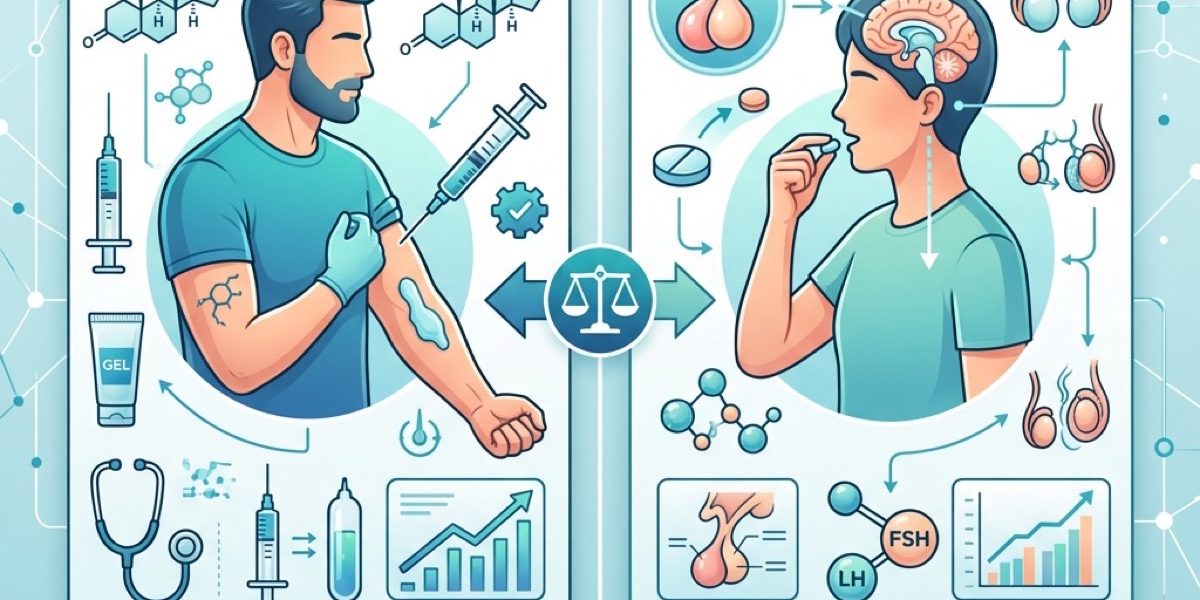
TRT and clomiphene are often discussed together because both can raise testosterone in selected men. They do it in very different ways. Testosterone replacement therapy supplies testosterone from outside the body. Clomiphene is a selective estrogen receptor modulator that can stimulate the brain-pituitary-testicular signaling pathway in men who can still respond internally.
That difference matters most when fertility is part of the conversation. Exogenous testosterone can suppress LH and FSH, which can reduce sperm production. Clomiphene may preserve upstream signaling in some men, but it is not a guarantee of pregnancy and it is not appropriate for every cause of low testosterone[1].
When TRT may fit
TRT is generally a medical discussion when symptoms of testosterone deficiency line up with repeatedly low testosterone on properly timed testing. The Endocrine Society and AUA both emphasize diagnosis before treatment, not treatment based on symptoms alone[2].
TRT may be appropriate when a man has confirmed hypogonadism, does not currently prioritize fertility, and accepts ongoing monitoring. Follow-up should include symptoms, testosterone levels, hematocrit, blood pressure, prostate-related considerations when appropriate, and side effects.
When clomiphene may fit
Clomiphene is usually discussed when the pattern looks more like secondary or functional hypogonadism, where the testes may still respond to stronger pituitary signals. It may be especially relevant for men who want to preserve fertility or who are not ready to suppress their own sperm production[4].
That said, clomiphene is not a casual alternative. In the United States, clomiphene citrate use in men for hypogonadism or fertility support is off-label rather than an FDA-approved male hypogonadism indication[3]. It can have side effects, including mood changes, visual symptoms, breast tenderness, and estradiol-related symptoms in some men. Any visual symptom should be discussed promptly with the prescriber.
What to check before deciding
- Two properly timed testosterone measurements when possible.
- Free testosterone or SHBG when total testosterone does not match symptoms.
- LH and FSH to understand whether the signal is primary or secondary.
- Semen analysis before treatment if future fertility matters.
- Sleep apnea, obesity, medications, alcohol, thyroid disease, and metabolic health.
Bottom line
TRT and clomiphene are not interchangeable. TRT replaces testosterone directly and can be effective for the right patient, but it may suppress sperm production. Clomiphene may preserve fertility signaling in selected men, but it still needs diagnosis, monitoring, and realistic expectations. The safest decision starts with labs, goals, and a clinician who understands both hormone health and fertility.
How the outcomes differ
The outcome a patient cares about may not be the same in every case. One man may care most about libido and energy. Another may care about sperm production. Another may have a history suggesting that the testes cannot respond well to pituitary stimulation. The treatment choice should follow the goal and the biology, not the name of the medication.
TRT can be direct and predictable for confirmed testosterone deficiency, but it also commits the patient to monitoring and a fertility conversation. Clomiphene can be appealing when preserving natural production is the goal, but it depends on a responsive axis and can still create side effects. A clinician should explain what would count as success, what would count as failure, and when the plan would change.
When neither option should be rushed
Neither TRT nor clomiphene should be started casually when the diagnosis is unclear. Poor sleep, untreated sleep apnea, major stress, weight gain, alcohol, medications, and overtraining can all distort symptoms and labs. If those drivers are present, the first step may be correcting the driver and repeating the evaluation.
The highest-risk mistake is treating fertility as an afterthought. Men who want children should have that conversation before therapy begins, because recovering sperm production after suppression can take time and may require specialist care.
References
- [1] Diagnosis and treatment of infertility in men: AUA/ASRM guideline part I. Fertil Steril. 2021. PMID 33309062.
- [2] Bhasin S et al. Testosterone Therapy in Men With Hypogonadism: Endocrine Society Clinical Practice Guideline. J Clin Endocrinol Metab. 2018. PMID 29562364.
- [3] Wheeler KM et al. Clomiphene Citrate for the Treatment of Hypogonadism. Sex Med Rev. 2019. PMID 30522888.
- [4] Huijben M et al. Clomiphene citrate: A potential alternative for testosterone therapy in hypogonadal males. Endocrinol Diabetes Metab. 2023. PMID 36998229.
